Research
Numerical Relativity of Neutron Star Binaries
Advisor: Prof. Nils Deppe
Term: Aug 2025 - Present
I work to implement a modified version of the Tolman–Oppenheimer–Volkoff equations in Python to numerically solve theoretical neutron stars with different equations of state (EOS). I have improved the precision of the simulated solutions by performing a rigorous expansion of the coupled ODE’s near the center of the star, and I am currently working to implement this improvement into the C++ SpECTRE code base. I am also investigating neutron star binary waveforms with degenerate tidal deformability factors, but different internal EOS, which will allow me to determine whether future observatories will have a high enough resolution to tell us anything new about neutron star microphysics.
View Technical Stack
Observational/Historical Astronomy of Nebular Growth
Advisor: Dr. Amanda Bauer
Term: May 2025 - Aug 2025
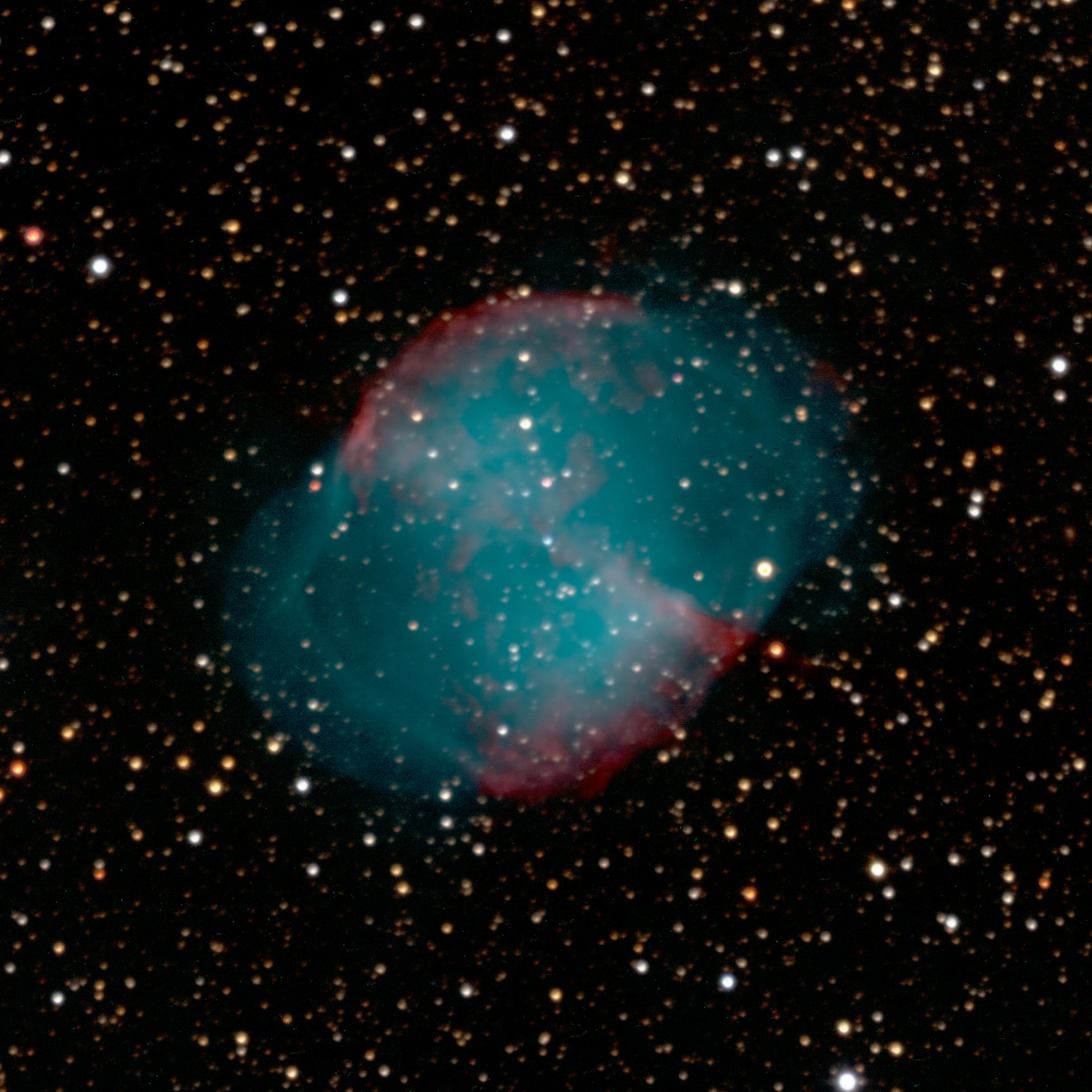
I conducted a study that examined the growth of the Dumbbell Nebula (M27) over a period of 119 years. I digitized historical M27 observations from the Yerkes glass plate collection and created a data reduction and analysis pipeline in Python to compare these plates with observations I took using the CMOS camera attached to the Yerkes 41” Reflector. I utilized several different Python packages and publicly available astronomy software programs to center each image on the central white dwarf and determine the change in M27’s radius over time.
View Technical Stack
Observational Cosmology Calibration and Instrumentation
Advisor: Prof. Abigail Crites
Term: Jan 2024 - May 2025
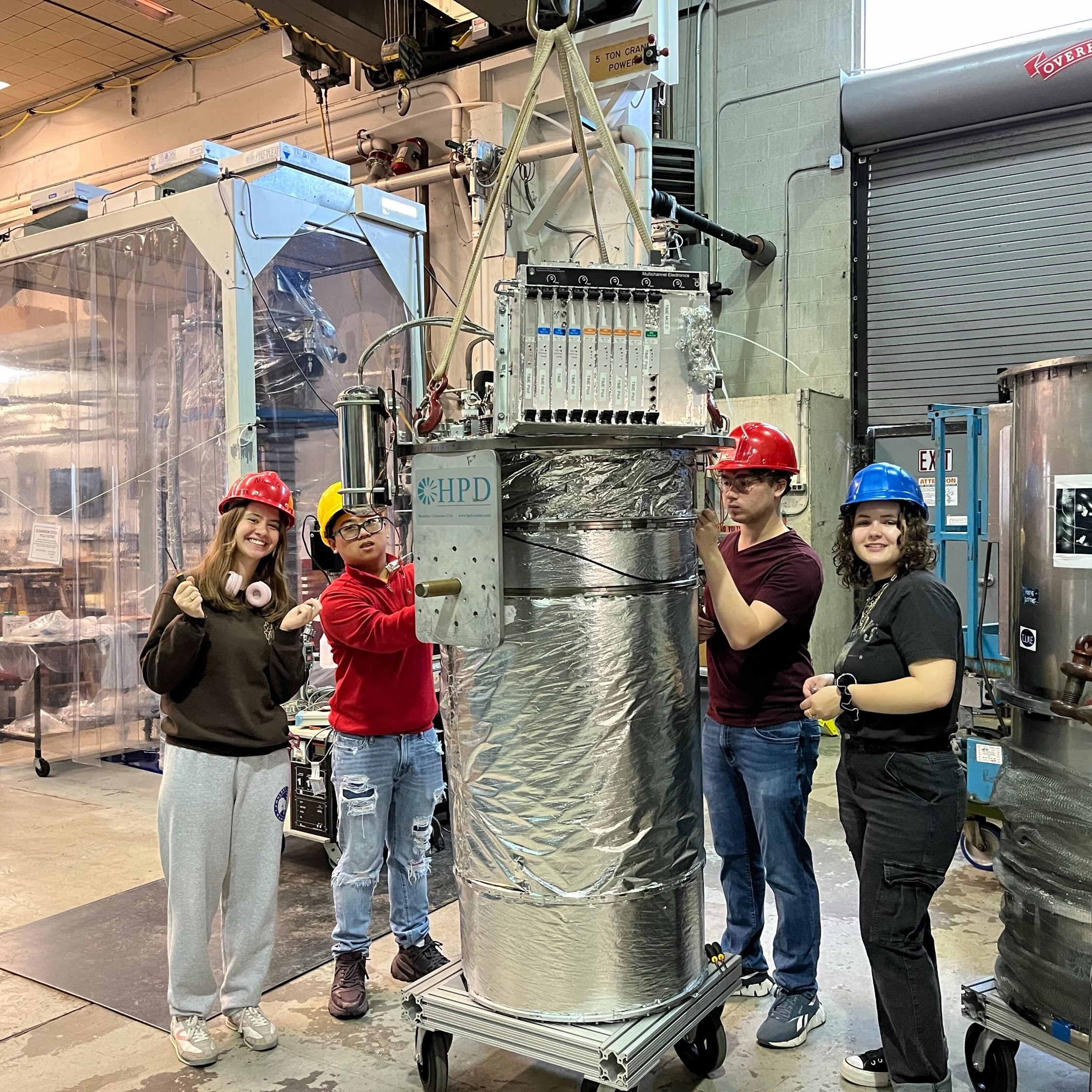
I implemented a Python calibration pipeline to maximize the number of viable TES Bolometers (TESB) in the TIME detector array. Each TESB required a specific transition temperature anywhere from 450-700 mK due to manufacturing inconsistencies, so I plotted the resistance curves of each column of detectors to determine the optimal current to pass. I also installed the detectors, tested the wiring of the cryostat, used a crane to assemble and disassemble the instrument, and worked on code to control an IR source array on a motor stepper to generate test observational data.